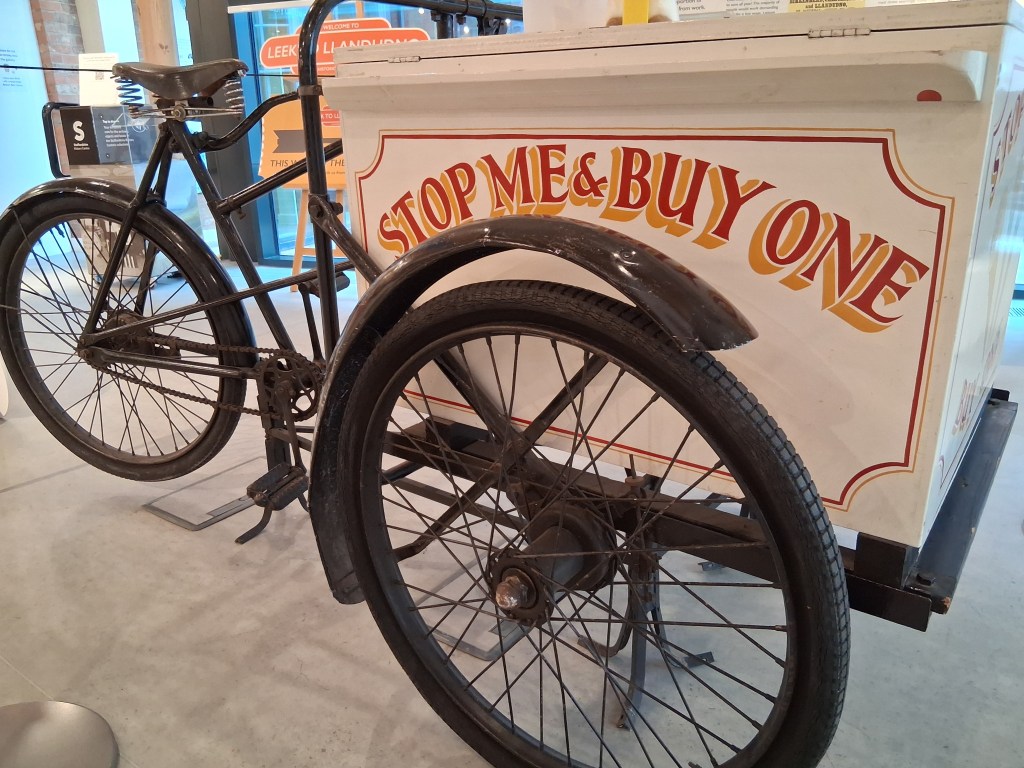
Our volunteer Richard has been taking a look at our summer exhibition.
Close your eyes and picture gentle waves lapping at the shoreline. Feel the gritty sand between your toes. Draw the salt air deep into your lungs; the drifting aroma of candy floss, vinegary chips and suntan lotion.
In these baking hot days you may find yourself dreaming longingly of a beach holiday, but Staffordshire is landlocked and almost as far as it is possible to be from the coast in Britain.
Fortunately, escape is at hand and it’s close to home. ‘Leek to Llandudno – A Historical Journey’ runs at the Staffordshire History Centre until 12 September.
This fascinating exhibition of images, stories and artefacts tells the story of holidays for the residents of Staffordshire.
Most of us take our breaks for granted, but holidays were only really for the wealthy until the turn of the 20th century. Holidays truly began for the working classes when factories would close down for maintenance for a week in the summer months. First there were the cotton workers’ holidays in Lancashire and then, in north Staffordshire, what became known as the Potters’ Holidays.
Imagine everyone you knew and everyone you worked with going on holiday at exactly the same time!
Holidays were unpaid, however. Although workers received four public holidays each year from the Bank Holiday Act in 1871, the exhibition informs us that it was not until the 1938 Holidays with Pay Act that the battle for paid leave was won by the unions. That took more than twenty years.
Many could still not afford to travel despite the availability of coach and rail. The exhibition captures recollections of days out on the doorstep in Staffordshire including bathing at Rudyard Lake, punting on the Caldon Canal, donkey rides at Milford Common, and picnics at Norbury Junction.
Another option for those with little to spend was to work on a farm. ‘Lend a Hand on the Land’ reads an ad from 1948 offering the chance of a change of scenery while earning.
Those fortunate enough to get to the coast may have travelled to Scarborough, Aberystwyth, Llandudno or Great Yarmouth among others. Llandudno became possible with a rail journey of around three-and-a-half to four hours.
The ‘cheap trip’ that gave its title to the exhibition was offered by Wesleyan Sunday Schools in Leek and departed on August 6, 1870.
Even with a 5:45am start the excitement of those boys and girls must have been overwhelming. And all for four shillings return.
For many of these visitors it would be the first time they saw the sea.
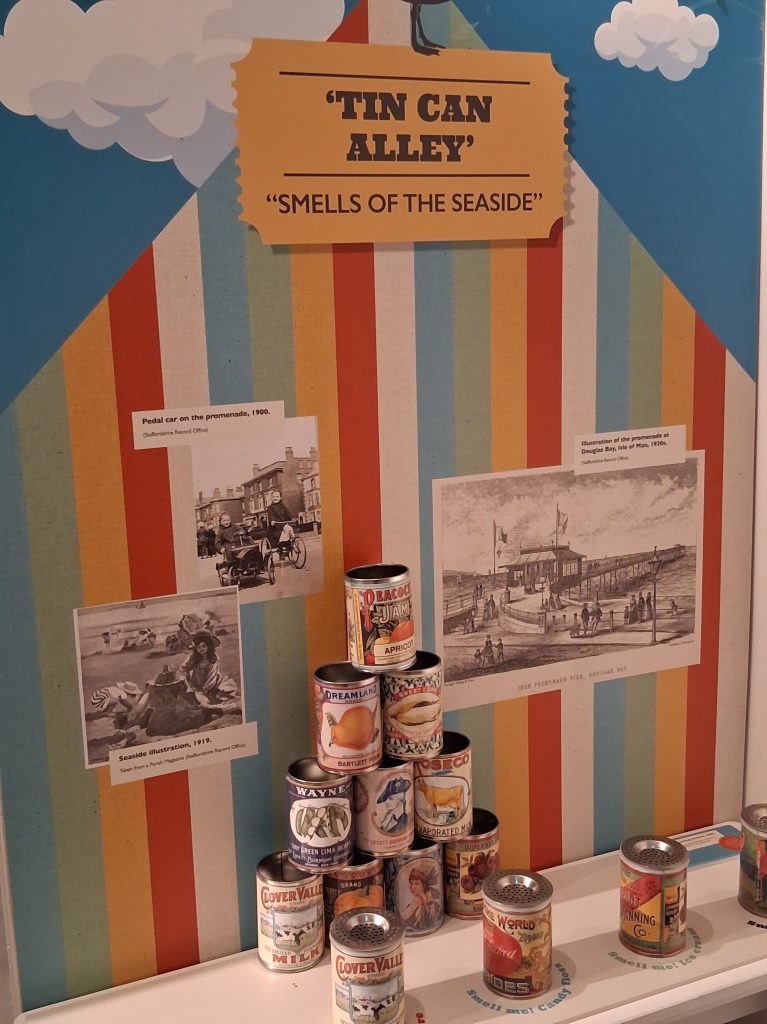
The exhibition gives a flavour of this experience with nice sensory touches. There are plenty of objects to touch and look at and there are giant pepper pots containing the scent of the seashore, candy floss, ice cream, and chips.
There is a picnic set, woolly bathing costumes designed to cover all, a Punch and Judy stand, buckets and spades, and picture postcards. With the advent of photography, postcards became popular. My favourite in the exhibition is the dapper chap in a boater hat and jacket posing with his pet terrier at the Pier Studios in Llandudno.
There are beautiful watercolour images from Esso road maps and brochures and booklets from the London, Midland and Scottish Railway to entice travellers north of the border. A nine-day coach trip to Bonnie Scotland, with a lengthy list of calling points, picks up in Stafford, Wolverhampton and Birmingham.
People saved up for these trips all year. There are receipts for a coach trip for 35 people from Stafford to Blackpool. The cost for the June 1947 booking is £24.15.
Mr Harvey from Etchinghill enquires about a flight from Birmingham to Jersey in the 1960s. He receives good news from the airline that if they are able to fill the seats for the rest of the flight, he can certainly travel.
The trend for seaside holidays began with George III’s health-boosting trips to Weymouth in the 1780s. Today, the British seaside is far more inclusive and as beloved as ever.
The sights, sounds and smells of childhood holidays are buried deep in our consciousness.
So if you can’t escape to the coast this week or next then the best thing may be to check in to the Staffordshire History Centre.


Leave a comment