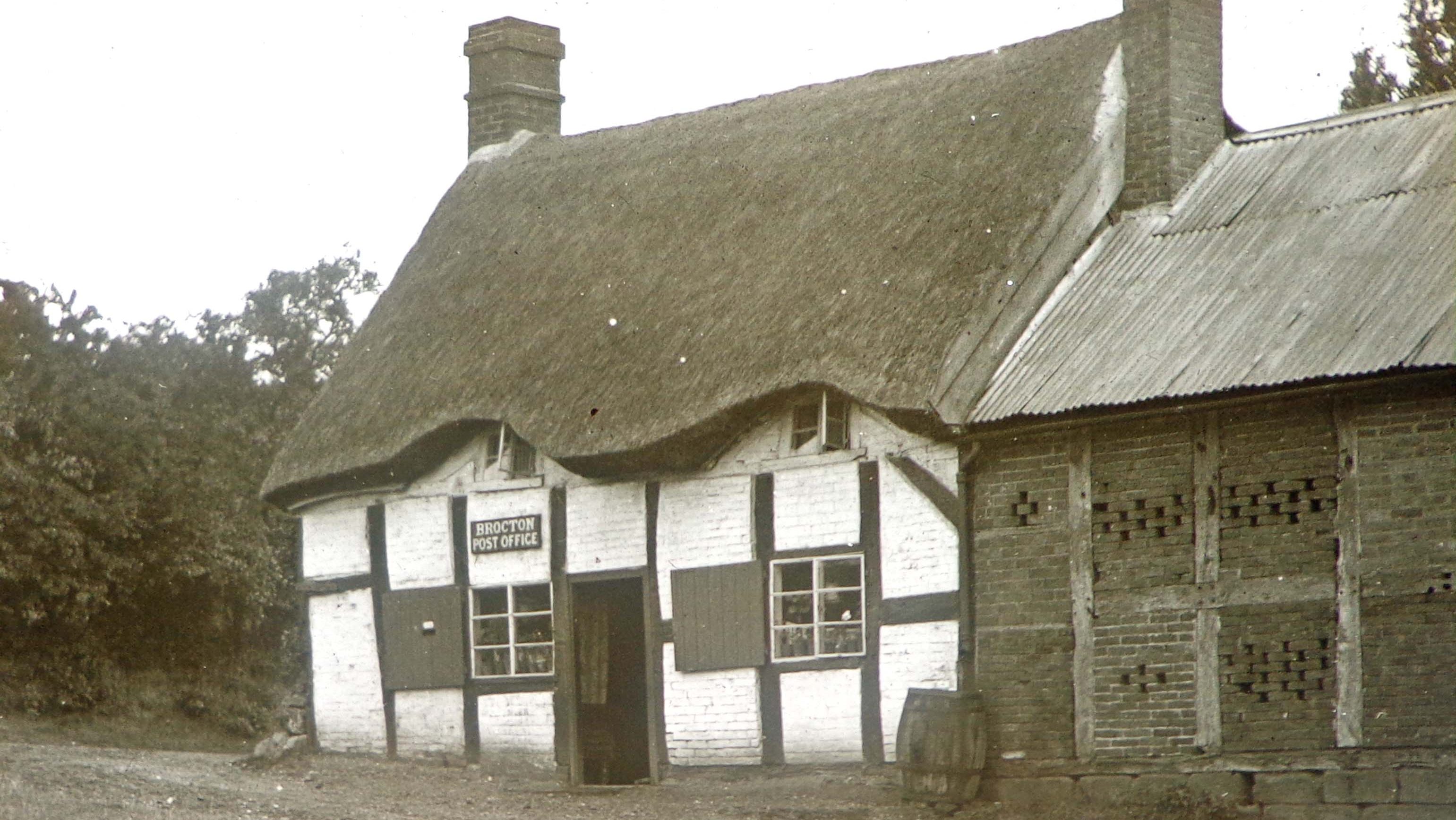
There are a number of resources available that can be useful in helping to trace the history of a property, its owners and occupants. Some sources can be more helpful than others and it might not be possible to put an exact date on an older property, but it is certainly possible to find out some of the history of both the building and the area that it occupies.
- Looking for physical evidence of the property’s history is always a good starting point – architectural style and building materials might help give you some idea of the building’s age.
- Look at the title deeds for the property, if they are available – they can provide details of previous owners and may date back far enough to give a date of construction. Not all title deeds survive, however, and modern deeds are only required to provide the history of the last 30 years. Whilst the Staffordshire & Stoke on Trent Archive Service does hold a large number of deeds (mainly from estate and solicitors’ collections), it does not hold deeds for every property in the county.
- Locate your property (or its future site) on the Ordnance Survey maps of the county. These will show you the historic parish where your property was located. Ordnance Survey (OS) mapping can be accessed free of charge via the National Library of Scotland website. This includes both the 6-inch and larger 25-inch scale ‘County Series’ maps for Staffordshire between c.1880 and 1945.
- Aerial photographs can be useful for working out a time period when properties were built or altered after 1945 – please click here to find out more.
- Once you know which parish your property came under, you will be able to look at the Tithe Map collection and the Enclosure Map collection from the Staffordshire & Stoke on Trent Archive Service, which can both be found on the Staffordshire Past Track website. These maps pre-date the Ordnance Survey, and are accompanied by awards, which give details of property owners and occupiers. Tithe Awards have been indexed and are available to access via our free Staffordshire Name Indexes website. Enclosure map awards are too complex to make available in the same way, but queries can be directed to our enquiries service.
- It is also worth visiting our free to access Staffordshire Past Track website, as your property may appear in a photograph, if only as part of a street view or in the background. The website features over 45,000 images, documents and maps relating to Staffordshire’s past. Unfortunately, there is no guarantee that anybody will have photographed your property, or that any older images of it are available either on Past Track or in our collections.
- If you are researching a large or old property, it may have been mentioned in printed historical sources, such as the Victoria County History of Staffordshire or Nikolaus Pevsner’s architectural book The Buildings of England: Staffordshire. The British History Online website features primary and secondary sources, calendars, data sets and maps, with a number of these resources – including the Victoria County History – accessible free of charge. Other sources on the website can be accessed via subscription.
- Trade directories can also be a useful source, especially for buildings which were business premises or occupied by a local noteworthy individual. Historical trade directories for Staffordshire and other counties in the UK can be accessed free of charge on the University of Leicester special collections website.
- You can see whether your property is listed using the Historic England website – if it is, there will be an architectural description of the building given on the individual listing.
- Electoral registers (lists of voters) can be useful for locating historical occupants of properties, but it was only in 1918 that all men over the age of 21 and all women over the age of 30 were granted the right to vote – it would not be until 1928 that women aged between 21 and 30 were allowed to vote, and 1967 when the voting age for everybody was lowered to 18. At present only a selection of Staffordshire electoral registers, dating between 1873 and 1875 are available online, via the subscription website The Genealogist. Printed electoral registers are held by Staffordshire and Stoke on Trent Archive Service, but there are gaps for portions of the county at various dates – you can see what we currently hold by looking at the PDF ‘Guide to Electoral Registers’ on our Guides to Sources page.
- If your property had a specialized use – such as a pub or vicarage – or if it formed part of a large landed estate, there may be a wider range of original documents that might relate to it. You could try a search of our online catalogue, Gateway to the Past, to see if you can identify any specific items. Alternatively, please contact our enquiries service for further advice.
- Please note that at present access to our physical collections is extremely limited, and that we may offer copying or short research as an alternative if your research does not come under our current restricted access criteria.
 Staffordshire History Centre