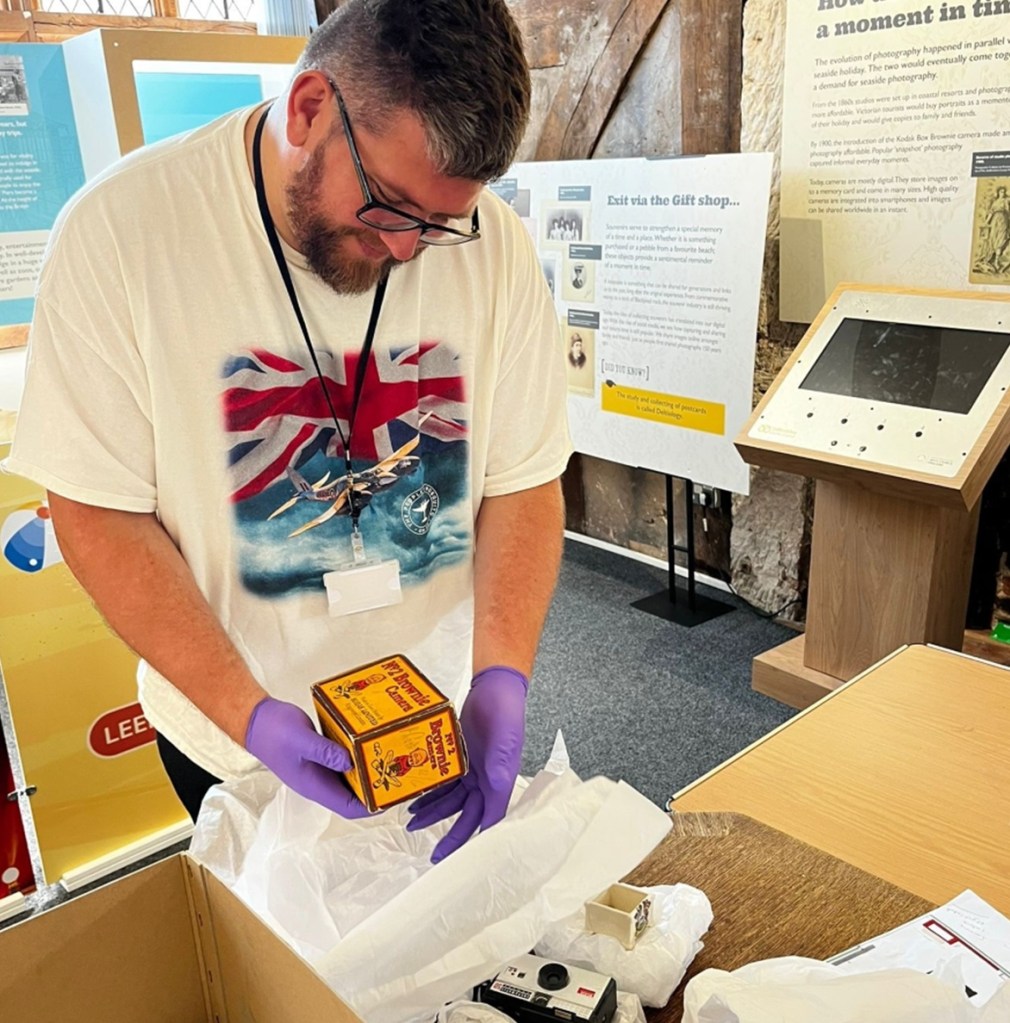
Rab joined the Archives and Heritage Service in 2024, taking up the post of Community History Development Officer. The post is funded by National Lottery Heritage Fund as part of the Staffordshire History Centre project. Here he talks about the work he has undertaken on an oral history project – and becoming a convert to the world of oral history!
I suppose this is the story—or perhaps a confession—of a convert.
Before beginning our latest oral history project, Pride in Our Past, I should admit that while I was new to recording oral histories, I was not new to using them. During my History M.A. dissertation, I spent countless hours listening to recordings, particularly at the Imperial War Museum, piecing together fragments of evidence for my research into British Army junior officer selection during the Second World War.
Yet despite this extensive use of oral history collections, I had never been on the other side of the recorder; they were something I listened to, analysed, and cited, rather than something I actively helped to create. What I did not anticipate was just how compelling—and how affecting—that process would be, both professionally and emotionally.
The Staffordshire History Centre’s project Pride in Our Past is dedicated to capturing and preserving the Staffordshire LGBTQ+ community’s lived experiences. Through in-depth interviews, participants have shared stories of identity, challenge, resilience, and joy: accounts of family rejection, job loss, and discriminatory healthcare but also tales of joy; long-term loving relationships, growing social acceptance, and the strength of a close-knit community brought together by shared experiences. These voices, too often overlooked in traditional historical records, are now being entrusted to our care – something I feel is a profound privilege.
Sitting opposite someone as they tell their story is a fundamentally different experience than listening to a recording. Pauses reflecting on friends lost to HIV/AIDS, self-mocking humour, sarcasm as defence, and hilarious retellings of adventures – all these quirks give each story its own flavour.
Oral history is not simply gathering facts; it is creating a shared moment grounded in trust. Speaking about one’s life with a near-stranger can feel unnatural, so I’ve developed a guiding principle: adapt to the needs of each participant. Conversations take place in person or online, and I often travel to meet people, particularly elderly participants, as a small but meaningful gesture of care and connection.
There is also an emotional weight to this work. Listening to accounts of prejudice alongside stories of pride and solidarity is moving, and at times shocking. While I have been aware of LGBTQ+ discrimination, I realised that this had been from a more comfortable standpoint. To hear not just the facts of the issues faced, but the real emotion, and at times scars left, has been a true eye-opener.
LGBTQ+ histories often sit at the intersection of the personal and political, and many interviewees navigated systems that not only failed to protect them, but just as often were actively trying to do harm to them. As an interviewer, I have ultimately to be an observer, but bearing a responsibility to listen with empathy and care.
Ethical considerations are central. Oral history is stewardship, not extraction. Participants entrust deeply personal memories, sometimes revisiting painful moments during the interview. Ensuring they feel comfortable, respected, and accurately represented is crucial, especially as these recordings will soon be publicly accessible in our archives. The importance of projects like Pride in Our Past becomes clear when considering archival gaps. LGBTQ+ histories have often been excluded or obscured. Oral history allows people to speak in their own voices, capturing nuance, humour, contradiction, and emotion that written records cannot. Future generations will hear these voices, not just read about them.
Professionally, Pride in Our Past has reshaped how I think about historical sources. Having relied on oral histories before, I now understand the care, intention, and relationship behind them. They are collaborative creations, not neutral records. This insight has made me a more critical – and more respectful – listener.
Surprisingly, the process has been energizing. Despite the emotional intensity, I often leave feeling privileged rather than drained. Being trusted with someone’s story, especially one rarely recorded, affirms that history matters – not just academically, but personally, as a way for people to make sense of their lives and preserve their experiences. The more people I have interviewed, the more determined I am to try searching for more people to share their stories for posterity.
Returning to oral history as both researcher and recorder has brought my academic work full circle. Recordings I once listened to felt distant; now I understand the care and humanity behind each interview. History is not only in archives, documents, or dates – it lives in people, in their memories, voices, and stories. Helping preserve those stories has been one of the most rewarding experiences of my professional life.
History is people’s stories – and listening to them is a privilege.
 Staffordshire History Centre
Leave a comment