Josh spent a week with the Archives and Heritage Team in May. Find out more about his experience in his blog below.
“During my week at the Staffordshire History Centre, I have been given the opportunity to experience many aspects of the different staff roles in the centre. Throughout the week I have been given ample time to speak with the team to and understand all the different roles and responsibilities of the members of staff as well as get an understanding of the different systems in place that allow the History Centre to function.
On the first day I was placed with the Monday Volunteer Group to create boxes and envelopes that will be used in future to store documents. Later in the week, I was also given the opportunity to meet some of the volunteer group that works on the transcription of documents in the archive. These helped me understand the importance of volunteers and how they contribute to the centre to complete tasks that the staff do not have availability to focus on. The experiences also allowed me to reach a greater understanding on the importance of working with volunteers and how vital it is to run a history/archive centre, as without them, many tasks would take far too long to complete.
On both Monday and Tuesday, I used the software Canva to create posters to advertise future events at the centre as well as activity sheets relating to the archive that can be given to younger visitors. These jobs gave me an insight into the roles that exist in the centre that would not immediately be apparent such as graphic design, allowing for the combination of other passions and hobbies with a history-based occupation.
During the week I was given the opportunity to use online applications such as Staffordshire PastTrack, a website that includes thousands of objects and photos in the archive, each with information about their age and the people and places shown in the images. While using PastTrack I saw how the community contributes to the archive as they identify people in photos or provide context for items that the centre would not know otherwise.
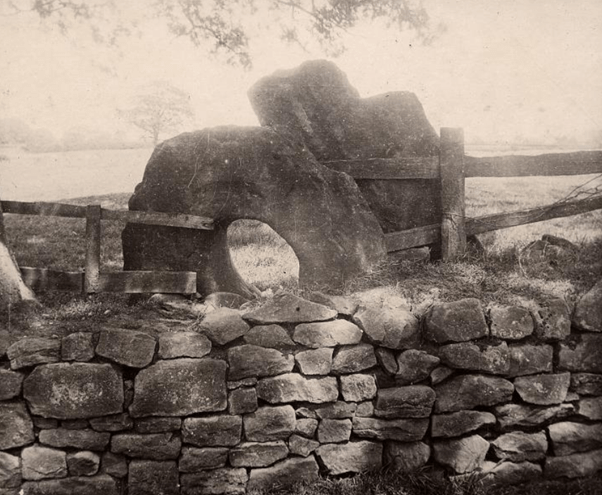
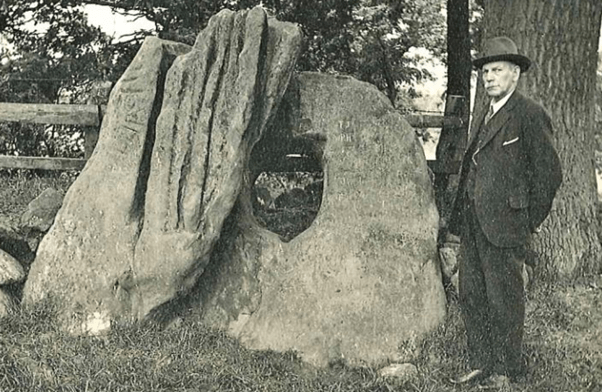
Towards the end of the week, I was given the chance to research a specific document or item of my choice from the collection. I chose to research ‘The Devil’s Ring and Finger’, a Neolithic structure located in the North-West of Staffordshire that the centre had photos of from the 1920s. I found this experience incredibly interesting due to the lack of information on the structure as well as the multiple different conclusions that historians had drawn about it, allowing me to explore a multitude of interpretations. For this research, I was also able to use resources from the archive that provided context from earlier on in the period that the sources I found online. This particularly intrigued me as it showed how, especially with a localized collection, documents and items were interwoven with each other and helped provide context to objects that on their own would be far more confusing.
One of the most interesting parts of my work experience was understanding the intricate system in place to keep track of and store documents in the archive. Over the course of the week I was shown different aspects of the system, beginning with returning documents that have been taken from the archive as well as removing documents from the archive that have been requested, then to providing documents to the public in a manner that ensures there are methods in place to protect the documents and prevent them from getting lost or misplaced such as weighing the documents before they are handed in and once they are returned to check if any parts of the document have been lost or removed. Finally, I got to see how new items are added into the system, the methods used to index them as well as what information is recorded about them to allow them to be easily identifiable. The most fascinating part of this was being able to see the archive for myself and walk through the thousands of documents lining shelves. This experience allowed me to truly appreciate how much work is required to store and maintain such an expansive collection as well as see the methods in place to make it as safe as possible from potential threats that could damage the documents such as insects or water.
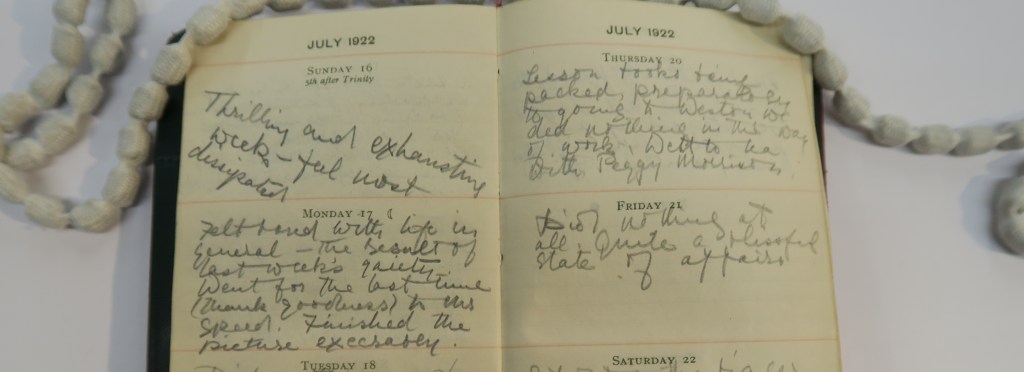
Another of the aspects I enjoyed about the work experience was how I was able to directly contribute to the centre and work on tasks independently. For example, I was given jobs such as completing forms for documents that had been requested or collating items to be taken offsite for the upcoming County Show as well as transcribing a 1920s document or researching prints that were going to be sold on the website. These jobs that were not jobs created for me but were actual tasks that needed doing gave me a better understanding of the kinds of things that would need to be done in the day-to-day life of people working in an establishment such as this, something that is not provided in the same capacity at other work experience opportunities and that I am very grateful for.
Finally, this week has greatly helped me to understand the different roles that are available from a career into history and the different characteristics that make a person best suited to such roles. This was especially insightful with the careers of an Archivist, something I had barely considered before this week. It has also helped me realise how specialised roles in the history sector can be, focusing on a specific period or specific type of artefact. Most importantly, this experience has shown me the necessity of places such as this centre in the preservation of our history and the collective history of an area, how it is used by people in the modern day to find their ancestors or research the history of where they live and how documents stored continue to be used to better understand the history of a region as a whole.”
 Staffordshire History Centre
Leave a comment