In the Beginning

A short guide to the history of the Alton Towers before the rollercoasters rocked its grounds – researched and written by Phoebe Haviland, former Stafford College A-Level student.
The history of Alton Towers is fascinating – it originated in 700AD as a Saxon hill fort and slowly over time shifted to what we know today. The family that once owned this great estate was the Talbot family – also holding the title of the Earls of Shrewsbury. The estate itself was given to the family by a crusader and was originally named Albertan Lodge (Albertan being the ancient name of Alton). The Tower specifically was called Alton Abbey: which makes no sense as it is not at all an Abbey!
When the estate came into the hands of the 15th Earl (Charles Talbot) in 1801, the man took great interest in the home; between 1802 and 1852 there was plenty of work done on the Towers and surrounding acres of the estate. This led to the gardens we know today as well as the lake that waits out front of the towers. During this remodeling of the home in 1821 it is said that the Earl came across a beggar woman who asked for money: he refused her pleas and rode on in his carriage. According to legend, the woman shouted a curse after the Earl: “for every branch of the old oak tree that falls, a member of the Earl’s family would die”. That night there was a horrid storm that knocked a branch down from the oak tree and a member of the family did pass: terrified, the Earl ordered his servants to chain up the tree branches. This folk story inspired the ride ‘Hex; The Legend of the Towers’ (with some creative liberties). The truth of the legend is of course widely debated: there are two different versions with the 15th or the 16th Earls being the one to ignore the beggar woman. Also, a branch fell in 2007, but the Talbot family reported that everyone was fine.
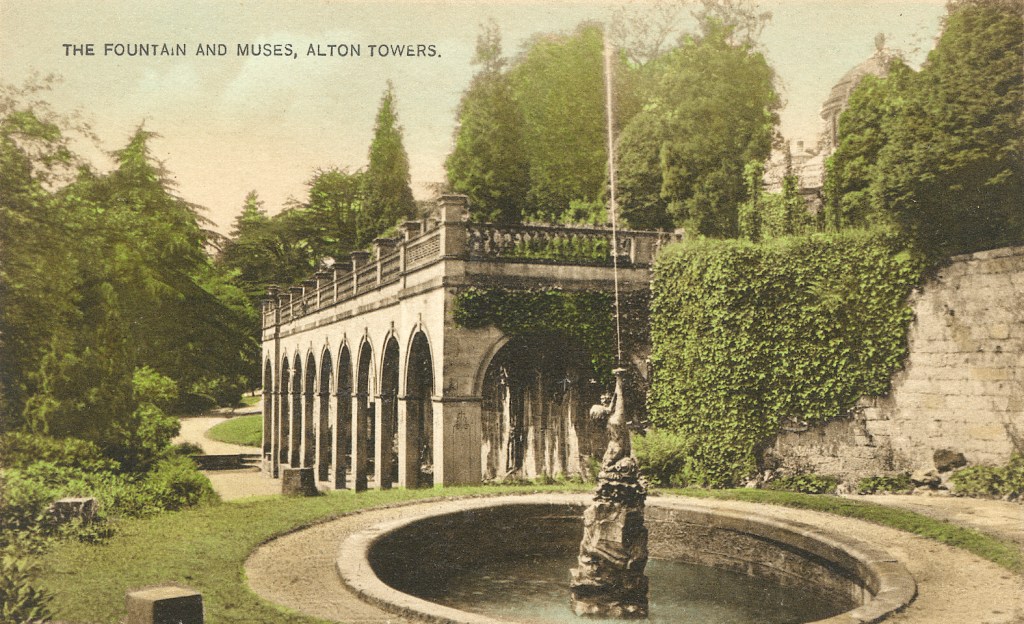
After the passing of Charles Talbot in 1827, the 15th and 16th Earls worked tirelessly on the Towers until the 16th Earl passed in 1852. The title and estate went to his cousin Burtrum. Unfortunately, Burtrum died within 4 years and the estate was left with no direct inheritor of the estate – there began legal battles over the Towers, which were won by the 18th Earl Henry. The items inside were not included and were therefore sold off. Henry did not do much with the estate, and when the 19th Earl inherited the land he opened its gardens to the public in 1860, helping raise funds to fix up the building. This decision has made Alton Towers the longest serving visitor attraction in the country.
The 20th Earl (also called Charles) followed in these footsteps and hosted the estate as a public tourist attraction in the beginning of the late 19th century – he offered fireworks, trapeze artists, exhibits of torture and balloon festivals. Charles was interested in coaches of all sorts, his favorite hobby being racing, and he implemented a coach route running to and from the towers. His carriage collection is now part of the Staffordshire County Museum collection, with one of his racing carriages to go on display at the new Staffordshire History Centre. However, when Charles and his wife divorced in 1896, he moved to the Towers and refused to pay for the general upkeep. The house fell into abandonment and disrepair, wasting away until it was again auctioned off, this time bought by local shareholders.
The Towers remained popular with the public during the late 19th and early 20th centuries, even Edward VII paid a visit in 1907, before they were handed over to the War Office during the First and Second World Wars and remained in control of the War Office until 1951. During this time the owners sold wood and plaster fixtures and boarded the towers closed, which led to water damage and rot. There was also a barracks built on the west end of the gardens!
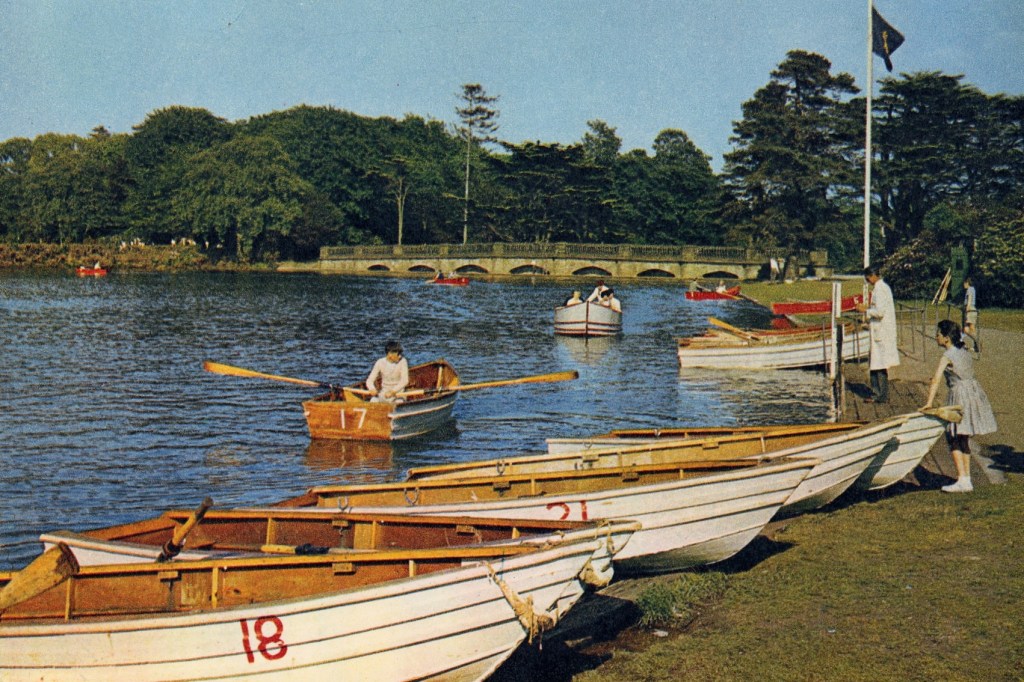
Parts of the Towers eventually reopened, like a tearoom in the Grand Banquet Hall and a miniature railway in the chapel, and once again the grounds were open for traveling funfairs. The restoration of damaged masonry in the chapel was the first modern restoration project in the park, and the railway shows a public enthusiasm for thrills which led directly to Hex thrill ride installed in the same building. In the 1960s and 1970s, concrete floors were added to Towers so people could enter, a permanent fair took its place behind the house, a boating area, chairlift and paddling pool were added to the lake and sea lions now lived on the grounds.
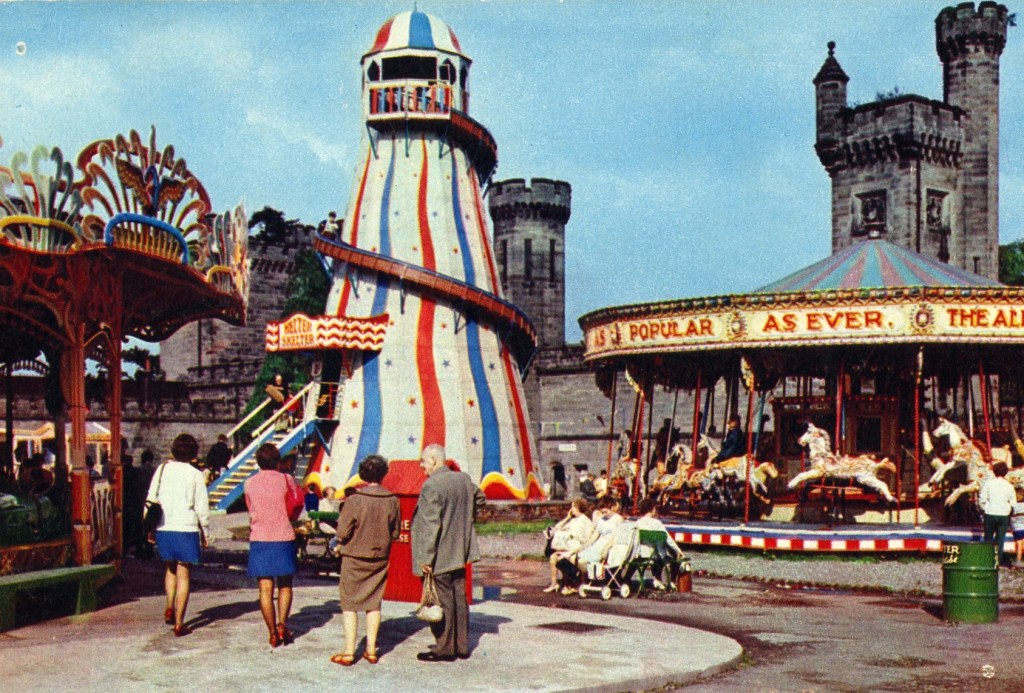
During this time Dennis Bagshaw managed Alton Towers and oversaw restorations to the gardens. In 1973, his daughter married John Broome, who bought out the controlling stakes in the park. He recognized that Alton Towers could be in the same league as Disneyland in theme park greatness, and the Towers estate finally became a theme park. The people of Staffordshire were introduced to attractions like Talbot Street, Fantasy Land and Alton Towers’ first roller coaster – the Verkoma coaster with a 24-person train named the Corkscrew.
Soon the Towers, with their tranquil picture gallery, fascinating medieval characteristics and nationally significant conservatory of over 12,000 panes of glass, would be surrounded by a very different kind of tourist attraction.
Many thanks to Warren Crickley, Head of Estates and Facilities, for speaking with me about the important work and major ongoing projects taking place at Alton Towers to honour, maintain and preserve the park’s pre-theme park legacy.
Look out for the second instalment of this three-part Staffordshire theme park series, in which we explores the history of the modern Alton Towers theme park.
 Staffordshire History Centre
Leave a comment